


October 15, 2026
Persistent Joint Pain and Stiffness: When Should You Consider Physiotherapy?
Estimated Read Time: 5 minutes
Key Takeaways
- Recurring joint pain deserves attention when it affects familiar activities, even if the discomfort isn’t severe.
- The timing of pain, stiffness and changes in movement can help a clinician understand what needs assessing.
- Suitable activity adjustments may help with mild discomfort, but persistent symptoms shouldn’t be managed through guesswork.
- Physiotherapy should focus on meaningful relief, better movement and realistic rehabilitation goals.
A knee that hurts while climbing stairs. A shoulder that feels stiff every morning. An ankle that starts troubling you halfway through your usual walk. Most people try to manage these problems themselves before considering professional help. They’ll rest, avoid a few activities or look for exercises online. That’s understandable, particularly when the discomfort seems manageable. But there’s a difference between allowing a minor ache to settle and repeatedly adjusting your lifestyle around pain. At HOPE Physiotherapy Rehabilitation Centre, we believe one of the most useful starting points is understanding what the discomfort is preventing you from doing. Physiotherapy for joint pain should address those difficulties, provided an assessment confirms it’s the appropriate form of care.
 When assessing joint problems, the location of pain is important, but it rarely tells the whole story. Take two people experiencing knee pain. One finds walking uncomfortable after twenty minutes. The other can walk reasonably well but struggles to get up from a chair. Although both have knee discomfort, the activities provoking their symptoms are different. That distinction matters when considering musculoskeletal physiotherapy. A clinician may need to examine joint mobility, muscle strength, movement control and the effect of previous injuries before recommending treatment.
Three Things Worth Noticing About Your Symptoms
Rather than trying to diagnose yourself, observe:
- When the discomfort begins: During activity, afterwards or following prolonged rest?
- What makes it worse: Walking, climbing stairs, bending, lifting or a particular exercise?
- What has changed: Are you moving less, avoiding activities or finding certain tasks increasingly difficult?
For example, knee pain while walking that develops after a particular distance is useful information. So is stiffness that takes several minutes to settle after you stand up. The Indian Council of Medical Research identifies pain during activity, brief stiffness after rest and reduced movement among the possible features of knee osteoarthritis. However, these symptoms can have other causes, so they shouldn’t be used to diagnose arthritis without assessment.
 A minor ache after unfamiliar physical activity may improve with suitable self-care. The concern arises when symptoms aren’t settling or begin affecting your normal routine. Here’s a practical way to consider your next step.
| What you’re experiencing | What to consider |
| Mild discomfort after activity that’s steadily improving, without significant swelling or injury | Temporarily reduce aggravating activity and monitor your symptoms |
| Recurring pain, restricted movement or stiffness affecting daily tasks | Arrange a professional assessment |
| Sudden severe pain, a hot swollen joint, fever, serious injury or inability to bear weight | Seek urgent medical attention |
The purpose of this distinction is to prevent two common mistakes: ignoring symptoms that need attention and assuming every painful joint needs immediate physiotherapy. Persistent swelling or prolonged morning stiffness, for example, may require a doctor’s assessment for an underlying inflammatory condition.
 You don’t necessarily have to stop being active because a joint hurts. For several musculoskeletal conditions, appropriate movement is an important part of management. The difficult part is deciding how much activity is suitable.
Modify the Activity, Not Your Entire Routine
Suppose your knee becomes uncomfortable after a long walk. Instead of abandoning walking altogether, a shorter distance may be more manageable while you monitor the problem. If repeated squatting aggravates your discomfort, temporarily reducing that movement may help until you understand the cause. Notice how your body responds, including whether symptoms become worse afterwards. Don’t force movements through significant pain or continue exercises that repeatedly aggravate the joint.
Keep a Simple Record Before Your Assessment
For a few days, note the activity that brings on discomfort, how long it lasts and whether there’s swelling or stiffness. There’s no need for a complicated diary. Something as simple as “Knee hurts when climbing stairs; walking on level ground is comfortable” gives a clinician a clearer picture than “I have knee pain.” This is particularly helpful when symptoms come and go. For people with knee osteoarthritis, India’s Ministry of Health & Family Welfare guidelines recommend appropriate exercise and self-management. These principles can support rehabilitation, but the exercises must suit the actual condition.
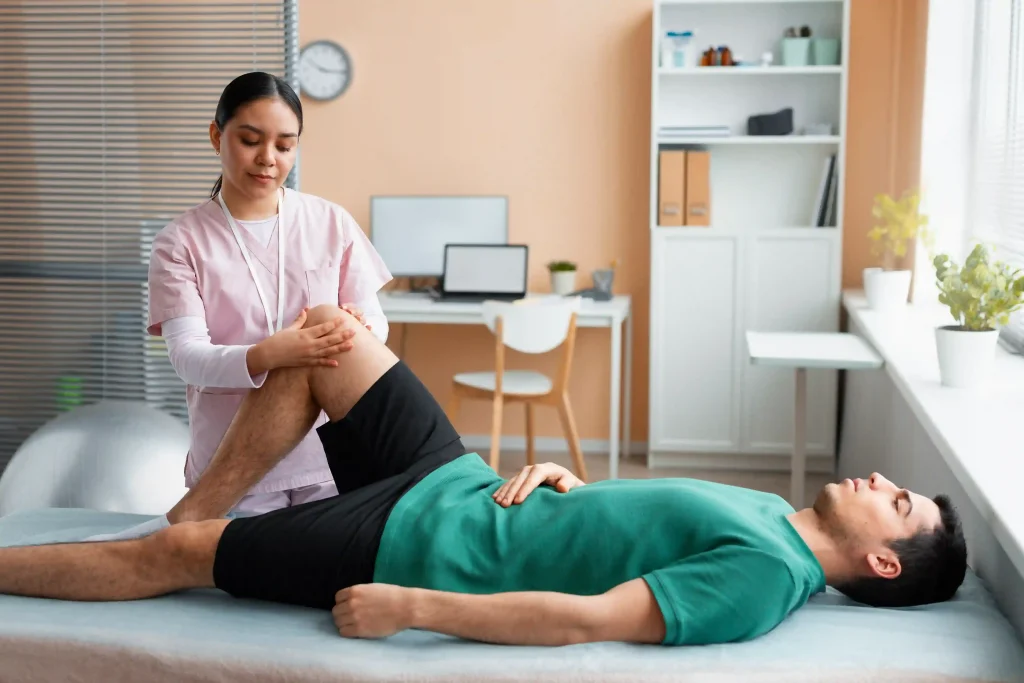 If you’re looking for joint pain physiotherapy, don’t judge the treatment solely by whether you feel better immediately after a session. Relief is important, certainly. But there’s a more useful question: are you gradually becoming better able to manage the activity that brought you for treatment?
A Proper Assessment Comes Before an Exercise Plan
In orthopaedic physiotherapy, an assessment may consider your medical history, symptoms, strength, mobility and ability to perform movements associated with the problem. For someone with knee pain on the stairs, examining lower-limb movement may be relevant. For shoulder stiffness, the assessment may focus on arm movement, strength and the activities that have become restricted. A useful assessment should help establish whether physiotherapy is appropriate, whether further medical evaluation is needed and which limitations treatment should address.
Treatment Should Have a Practical Goal
Depending on the findings, rehabilitation may involve strengthening, mobility exercises, movement retraining and guidance on managing daily activities. We’d encourage you to ask three questions before beginning a treatment programme:
- What is the main difficulty we’re trying to improve?
- What activities or exercises are appropriate between appointments?
- How will we know whether I’m making progress?
The answers might involve walking farther, climbing stairs more comfortably or returning gradually to a favourite activity. There’s no fixed recovery timeline, and not every condition can be completely resolved. What matters is having a plan that’s appropriate to your condition and reviewed as you progress.
If you’re looking for a physiotherapist in Goa, we’d encourage you to consider more than the treatment techniques available. A proper assessment should help you understand what’s contributing to your discomfort, which activities need attention and what realistic progress might look like. At HOPE Physiotherapy Rehabilitation Centre, our orthopaedic physiotherapy services focus on individual movement difficulties and rehabilitation needs. We consider the person’s symptoms, physical abilities and everyday goals before recommending an appropriate treatment approach. With centres in Calangute, Corlim and Panjim, HOPE is an option for those seeking a physiotherapy clinic in Goa. You can contact our team to enquire about an assessment.
Medical Disclaimer: This article provides general health information and isn’t a substitute for individual medical advice or diagnosis. Joint pain has several possible causes, and treatment depends on clinical findings. Consult a qualified healthcare professional for persistent symptoms and seek urgent care for the warning signs described above.